

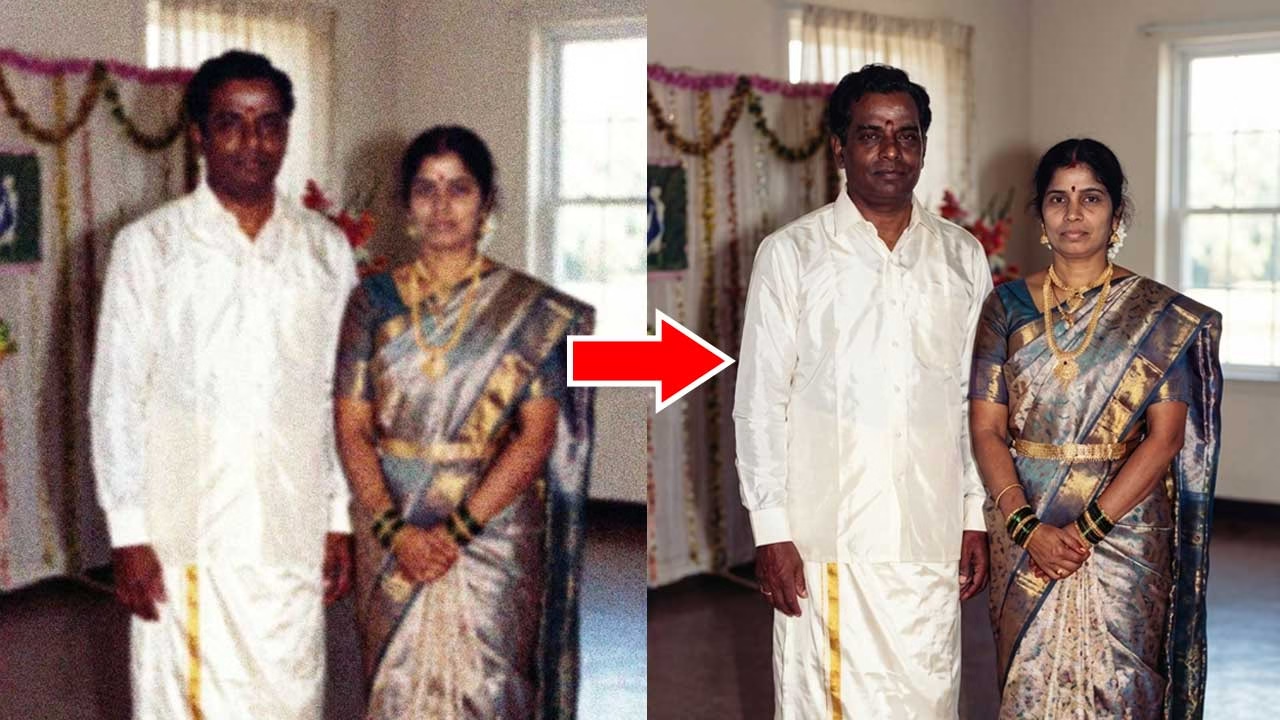
An old photograph does not fade because of time alone; it fades because technology once had limits. A blurred wedding portrait or a cracked childhood photo carries emotion that modern cameras can easily capture today but could not back then. Artificial intelligence now fills that historical gap, not by guessing blindly, but by learning how images should look. Through carefully written AI prompts, even damaged, low-resolution photographs can be transformed into detailed 4K-quality visuals that feel both realistic and respectful to the original memory.
Understanding Why Old Photos Lose Quality Over Time
Photographs taken decades ago were constrained by film grain, early lenses, lighting conditions, and storage methods that were far from ideal. Over time, paper degradation, scratches, moisture exposure, and scanning limitations further reduced clarity. When these images are digitized, the resolution is often extremely low, making facial features unclear and textures almost invisible. AI enhancement does not simply upscale these images; it reconstructs missing information using trained visual patterns, allowing old photos to regain lost detail without manual retouching.
The Role of AI Prompts in Image Restoration
AI prompts act as instructions rather than filters. Instead of applying a generic enhancement, a prompt guides the AI on how to interpret faces, clothing, lighting, and background elements. When restoring old photographs, prompts help define age-appropriate skin texture, realistic fabric details, and historically accurate tones. The better the prompt, the more context the AI understands. This is why prompt engineering plays a crucial role in achieving natural-looking 4K results instead of artificial or over-processed images.
How AI Reconstructs Missing Facial Details
Faces are the most sensitive part of any old photograph, and also the most challenging. AI models trained on millions of facial structures analyze bone alignment, eye depth, skin gradients, and symmetry. With a well-written prompt, the system enhances eyes, lips, and expressions while preserving the person’s identity. Instead of inventing features, the AI predicts the most statistically accurate reconstruction based on age, lighting direction, and facial proportions found in the original image.
Transforming Low-Resolution Images into 4K Output
Upscaling alone does not create true 4K quality. AI enhancement works by generating new pixels that blend seamlessly with existing ones. Through prompts that specify sharpness control, texture realism, and noise reduction, the AI creates an image that holds detail even on large screens. Hair strands, fabric folds, and background depth are reconstructed in a way that feels intentional, allowing the final output to meet modern 4K display standards without appearing digitally forced.
Balancing Realism and Authenticity
One of the biggest challenges in photo enhancement is avoiding over-modernization. AI prompts must be written carefully to retain the historical mood of the image. Skin should not appear plastic, and lighting should not resemble modern studio photography. By instructing the AI to maintain original shadows, grain softness, and era-specific color tones, the enhanced image remains authentic. This balance is what separates professional-grade AI restoration from amateur enhancements.
The Importance of Prompt Precision
Generic prompts often lead to inconsistent results. A detailed prompt specifies facial preservation, background continuity, realistic texture generation, and controlled sharpening. It also instructs the AI to avoid altering expressions or adding elements that never existed. Precision ensures that the enhanced image looks like a refined version of the original rather than a reimagined portrait. This level of control is what makes AI prompts powerful tools rather than simple commands.
Handling Damaged and Torn Photographs
Old photos often contain physical damage such as cracks, stains, or missing sections. AI enhancement combined with restoration prompts allows the system to intelligently fill gaps while respecting surrounding patterns. The AI analyzes nearby textures to reconstruct missing areas naturally. Instead of cloning pixels repeatedly, it generates context-aware content, making repairs invisible to the viewer and restoring continuity without destroying the emotional integrity of the image.
Colorization and Tone Restoration Through AI
Many old photographs are black and white or heavily discolored. AI prompts can guide realistic colorization by specifying natural skin tones, period-accurate clothing colors, and soft environmental hues. This process does not randomly apply color; it interprets light intensity and material types. When done correctly, colorized and enhanced images feel historically grounded rather than artificially vibrant, making them suitable for archival, family, or professional use.
Why AI Prompt-Based Enhancement Has High Commercial Value
The demand for photo restoration is growing rapidly across genealogy services, digital archiving, social media creators, and family history projects. AI-based enhancement significantly reduces time and cost compared to manual editing. Because results can reach professional 4K quality, this service holds high commercial and advertising value. Businesses offering AI photo enhancement benefit from strong user intent, making this niche particularly attractive for premium monetization opportunities.
Prompt
Enhance the portrait while strictly preserving the subject’s identity with accurate facial geometry. Do not change their expression or face shape. Only allow subtle feature cleanup without altering who they are. Keep the exact same background from the reference image. No replacements, no changes, no new objects, no layout shifts. The environment must look identical.
The image must be recreated as if it was shot on a Sony A1, using an 85mm f1.4 lens, at f1.6, ISO 100, 1/200 shutter speed, cinematic shallow depth of field, perfect facial focus, and an editorial-neutral color profile. This Sony A1 + 85mm f1.4 setup is mandatory. The final image must clearly look like premium full-frame Sony A1 quality.
Lighting must match the exact direction, angle, and mood of the reference photo. Upgrade the lighting into a cinematic, subject-focused style: soft directional light, warm highlights, cool shadows, deeper contrast, expanded dynamic range, micro-contrast boost, smooth gradations, and zero harsh shadows.
Maintain neutral premium color tone, cinematic contrast curve, natural saturation, real skin texture (not plastic), and subtle film grain. No fake glow, no runway lighting, no oversmoothing. Render in 4K resolution, 10-bit color, cinematic editorial style, premium clarity, portrait crop, and keep the original environmental vibe untouched. Re-render the subject with improved realism, depth, texture, and lighting while keeping identity and background fully preserved.
NEGATIVE INSTRUCTIONS:
No new background.
No background change.
No overly dramatic lighting.
No face morphing.
No fake glow.
No flat lighting.
No over-smooth skin.
The Future of Memory Preservation Through AI
As AI models continue to evolve, photo enhancement will move beyond restoration into preservation. Old photographs enhanced to 4K become future-proof digital assets, safe from physical decay. With thoughtfully crafted prompts, users can preserve emotional authenticity while gaining modern clarity. This technology does more than improve image quality; it protects personal history, ensuring that memories once limited by old technology can now exist in their fullest visual form.