

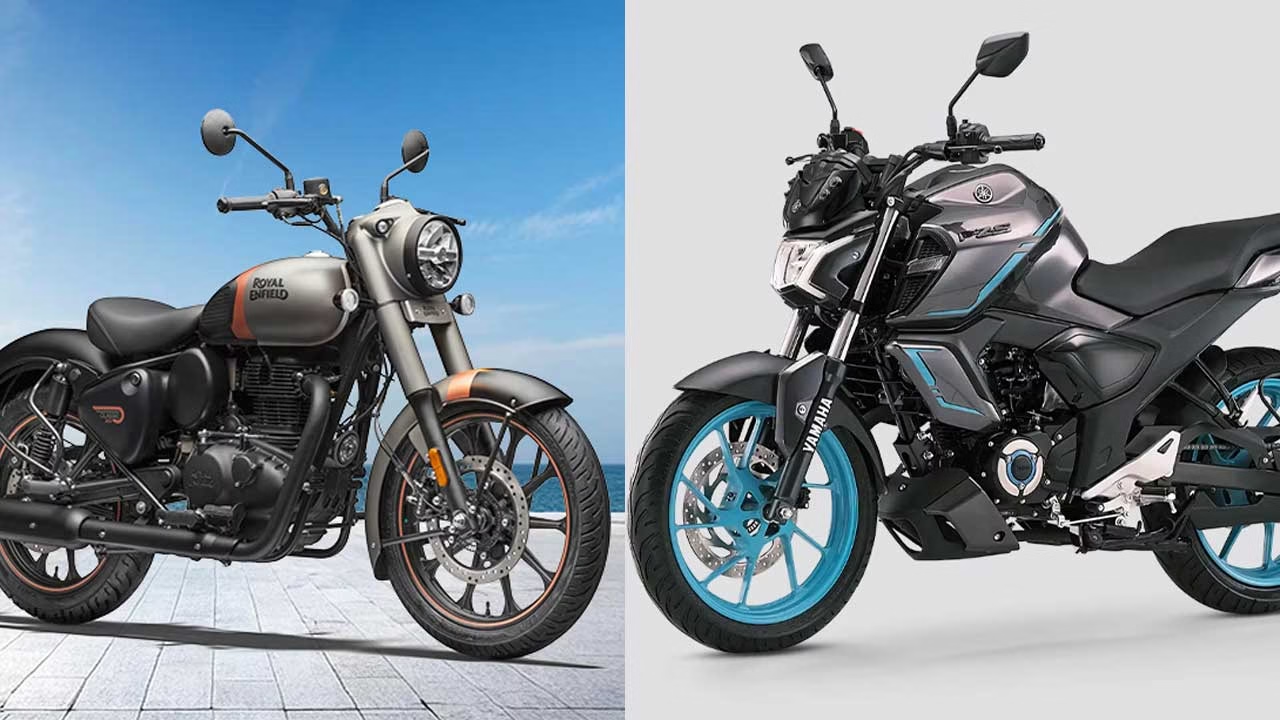
A bike being assembled on screen can feel oddly cinematic when artificial intelligence is guiding every frame, camera angle, and movement. Instead of beginning with definitions or background, it is better to imagine the final result first: a smooth, visually rich video where each bike part appears, rotates, connects, and locks into place as if guided by invisible hands. This experience is made possible by carefully written AI prompts that translate mechanical logic into visual storytelling. The power lies not in the software alone, but in how clearly human intent is communicated to it.
Understanding AI Prompts for Assembly-Based Videos
An AI prompt is not merely an instruction; it is a detailed narrative that explains what should happen, how it should look, and why it should unfold in a specific order. When creating a bike assembly video, the prompt must describe components such as the frame, wheels, chain, and brakes in spatial and temporal terms. The AI interprets this information to generate a coherent sequence. Precision in language directly affects realism, making prompt engineering the foundation of professional-quality results.
Structuring the Assembly Flow in Visual Logic
Bike assembly follows a natural mechanical order, and the AI must be guided to respect that logic. A well-written prompt explains which parts appear first, how they align, and how transitions occur between steps. Describing gravity, torque, rotation, and alignment helps the AI simulate realistic motion. This structured flow prevents visual confusion and creates a sense of authenticity that viewers subconsciously recognize, even if they are not mechanically inclined.
Crafting Cinematic Detail Within the Prompt
High-performing AI-generated videos rely heavily on descriptive visual cues. When assembling bike parts, prompts should include lighting style, background environment, material textures, and camera movement. Words describing metallic sheen, matte paint, slow-motion tightening, or macro close-ups elevate the video from instructional to cinematic. These details influence the AI’s rendering style, helping produce content suitable for premium advertising, product launches, and monetized educational platforms.
Choosing the Right AI Video Generation Approach
Different AI models interpret prompts in different ways, especially for technical assembly content. Some excel at realistic physics, while others focus on stylized motion. The prompt should be adapted to the chosen tool’s strengths, specifying whether realism, animation, or hybrid visualization is preferred. This alignment ensures smoother output and reduces the need for multiple regeneration cycles, saving time while maintaining professional consistency.
Enhancing Accuracy With Layered Prompt Design
A single, overloaded prompt can confuse an AI system. Advanced creators often use layered prompting, where the main prompt defines the scene and secondary instructions refine motion, timing, and perspective. For bike assembly videos, this approach allows fine control over how bolts tighten, chains align, or wheels spin. Layered design improves accuracy and results in visuals that feel engineered rather than randomly generated.
Integrating Branding and Commercial Intent
High CPC content demands commercial awareness, and AI prompts can subtly include branding elements. Describing logo placement on the bike frame, brand colors in lighting, or a premium workshop setting helps align the video with marketing goals. This is especially valuable for e-commerce, affiliate campaigns, and sponsored content, where the assembly video is not just educational but also a conversion-focused asset.
Using AI Prompts to Reduce Production Costs
Traditional bike assembly videos require physical components, studio space, skilled videographers, and multiple retakes. AI-generated alternatives drastically reduce these expenses. A well-crafted prompt can replace days of shooting with minutes of rendering. This cost efficiency makes AI-driven assembly videos attractive to startups, online retailers, and content creators looking to scale production without sacrificing visual quality.
Avoiding Common Mistakes in Assembly Prompts
Vague language is the most common reason AI-generated assembly videos fail. Prompts that do not specify orientation, scale, or sequence often result in unrealistic visuals. Overuse of generic terms also limits creative control. Clear, descriptive phrasing ensures the AI understands not only what parts to show, but how those parts interact. Precision prevents visual errors that can damage credibility in technical or commercial contexts.
Optimizing Videos for SEO and Monetization
AI-generated bike assembly videos can be repurposed across websites, ads, and platforms, but the prompt should consider the final usage. Describing aspect ratios, pacing suitable for short-form or long-form content, and clean backgrounds helps optimize videos for SEO-driven pages and high-value ad placements. The better the prompt aligns with platform requirements, the higher its monetization potential.
Expanding Educational and Training Applications
Beyond marketing, AI-generated bike assembly videos serve training and learning purposes. Prompts can instruct the AI to slow down critical steps, highlight component names, or visually isolate complex mechanisms. This makes the content suitable for online courses, virtual workshops, and technical onboarding. AI prompts thus become tools for scalable education, reducing dependency on physical demonstrations.
Prompt:
Use first frame as starting reference and second frame as ending reference. Transform the key into the motorcycle smoothly with realistic materialization effect. Maintain exact camera angle and background.Add subtle dust and cinematic motion. Keep the subject position stable. Avoid glitches, avoid stretching, keep realistic lighting and shadows. Ultra realistic.
AI Website
Where AI-Driven Assembly Videos Are Headed Next
As AI systems grow more advanced, prompts will evolve from static instructions into adaptive frameworks that respond to user intent. Bike assembly videos will soon be customizable in real time, adjusting parts, colors, or difficulty levels instantly. Those who master prompt creation today are positioning themselves at the forefront of a high-value content ecosystem where creativity, automation, and commercial impact converge naturally.